Business
About Us
Establishment of Mid- To Long-Term Goals and Strategies
■ Establishment of Mid- To Long-Term Goals and Strategies(2025)
| Category | Long-Term Goals (2050 Targets) | Med- to Short-Term Goals | Strategy |
|---|---|---|---|
| Carbon Neutrality | - Reduce Scope 1 and 2 greenhouse gas emissions by 90% (compared to 2025 levels) - Achieve total emissions of 400 tCO2e or less - Achieve Net Zero (including offsetting remaining emissions) |
- Reduce Scope 1 and 2 greenhouse gas emissions by 60% by 2030 (compared to 2025 levels) - Achieve total emissions of 1,700 tCO2e or less |
- Reduce annual utility consumption by 1.5% - Invest in high-efficiency equipment and improve processes - Reduce emissions per unit of production by 3% annually |
| Environmental Issues |
- Achieve a 100% waste recycling rate - Achieve zero landfill and incineration waste |
- Maintain a recycling rate of 90% or higher at the Iksan plant |
- Continue to identify recycling partner companies and promote recycling . Recycling rate: 00% in 2025 → 90% or higher in 2026 - Strengthen sorting and recycling processes - Advance waste management at workplaces |
| Continue to reduce waste generation | - Establish and operate a unit-based waste management system |
-Reduce unit waste generation at the Iksan plant by 5% in 2026 . 2025: 4,078 per unit → 2026 Target: 3,874 - Implement process improvements and defect reduction initiatives |
|
| Zero Environmental Incidents |
- Operate EHS committees led by the management - Achieve 100% implementation rate for EHS improvements through regulatory reviews |
- Hold monthly EHS committee meetings - Perform quarterly regulatory reviews and manage on-site improvement tasks |
|
| Manage air and water pollutant emissions below 50% of legal standards | - Achieve 100% compliance with self-measurement and legal standards |
- Hold monthly EHS meetings - Conduct facility inspections by environmental technicians during self-measurements (twice a month) . Inspect for damage to discharge and prevention facilities . Inspect machinery and equipment associated with prevention facilities . Check the installation of branch piping and verify air dilution, etc. |
|
| Safety Issues | Achieve zero major accidents at workplaces |
- Operate EHS committees led by the management - Advance workplace risk assessments |
- Hold monthly EHS committee meetings - Gather worker feedback for risk assessments . Conduct risk assessments that incorporate feedback from workers . Issue on-site improvement tasks and achieve a 100% implementation rate |
| - Operate EHS MBO |
- Conduct EHS improvement activities led by on-site departments (reflecting individual MBO performance) . Identify near-miss incidents (2 cases per person) and achieve 100% submission rate of incident reports . Conduct emergency response drills (once every half-year) and achieve a 100% submission rate of drill reports . Achieve zero incidents of major accidents, fires, or explosions |
Details of violations of environmental law
■ Details of violations of environmental law (2025)
| Type | Description | Recurrence prevention measures |
|---|---|---|
| Details of violations of environmental law | 0 | N/A |
Environment management training activities
■ Environment management training activities (2025)
| Type | Training Name | Training Host | Training Method | Training Date | Participants |
|---|---|---|---|---|---|
|
R&D Center
(Bundang) |
Waste generators
(Legal training) |
Korea Environment Conservation Institute | Online training | 2025-06-27 | Research Institute Waste Manager (1 person) |
| General Water Quality (Outsourced) Environmental Technician (Mandatory Training) |
Korea Environmental Conservation Institute | Online training | 2025-06-25 | Research Institute Water Quality Environmental Technician (1 person) |
|
| Supervisors (Mandatory Training) |
Korea Industrial Safety Association | Online training | 2025-01-01 ~ 2025-12-31 | Supervisors (15 persons) |
|
| Latest Grounding Technology and Application Practice (On-the-Job Training) |
Korea Occupational Safety and Health Agency | Online training | 2025-10-20 ~ 2025-10-22 | Safety Manager (1 person) |
|
| Explosion-Proof Technology Practice (On-the-Job Training) |
Korea Occupational Safety and Health Agency | Online training | 2025-09-15 ~ 2025-09-17 | Safety Manager (1 person) |
|
| Emergency First Aid Training (On-the-Job Training) |
Disaster Prevention Division, Bundang Fire Station | Online training | 2025-12-17 | Entire Research Institute Staff (120 persons) |
|
| Plant (Iksan) |
Technical Staff and Managers Handling Hazardous Chemicals (Mandatory Training) |
Korea Chemicals Management Association | Online training | 2025-05-28 ~ 2025-05-29 | Technical Staff Handling Hazardous Chemicals (1 person) Manager Handling Hazardous Chemicals (1 person) |
| Workers Handling Hazardous Chemicals (Mandatory Training) |
Self-training | Online training | 2025-01-01 ~ 2025-12-31 | Workers Handling Hazardous Chemicals (51 persons) |
|
| Supervisors (Mandatory Training) |
Korea Industrial Safety Association | Online training | 2025-01-01 ~ 2025-12-31 | Supervisors (18 persons) |
|
| On-the-Job (New Hires) Training for Safety Manager (Mandatory Training) |
Korea Safety Supervisor Association | Online training | 2025-03-24 ~ 2025-03-28 | Safety Manager (1 person) |
|
| Refresher Training for Occupational Safety and Health Managers (Mandatory Training) |
Training Institution Certified by the Ministry of Employment and Labor | Online training | 2025-03-01 ~ 2025-07-31 | Occupational Safety and Health Manager (1 person) |
|
| Practical Training for Hazardous Materials Safety Managers (Mandatory Training) |
Korea Fire Safety Institute | Online training | 2025-03-12 ~ 2025-05-10 | Hazardous Materials Safety Manager (2 persons) |
|
| Workplaces Handling Hazardous Chemicals Chemical Safety Management Training | Jeonbuk Regional Environmental Agency | Online training | 2025-04-15 | Factory EHS Officers (2 persons) |
Greenhouse Gas Emissions
■ Greenhouse Gas Emissions (SCOPE 1+2)(2021~2025)
| Year | Type | Greenhouse gas emissions (tCO2e) | Greenhouse gas intensity (emission/sales) (KRW 100 million) |
|
|---|---|---|---|---|
| Target | performance | |||
| 2021 | SCOPE1 | - | - | - |
| SCOPE2 | 9,000 | 8,688 | 2.28 | |
| 2022 | SCOPE1 | 150 | 109 | 0.02 |
| SCOPE2 | 8,558 | 7,441 | 1.61 | |
| 2023 | SCOPE1 | 108 | 116 | 0.03 |
| SCOPE2 | 7,330 | 4,889 | 1.14 | |
| 2024 | SCOPE1 | 115 | 120 | 0.02 |
| SCOPE2 | 4,816 | 4,434 | 0.78 | |
| 2025 | SCOPE1 | 119 | 124 | 0.02 |
| SCOPE2 | 4,367 | 4,278 | 0.69 | |
Energy Use
■ Energy Use (2021~2025)
| Year | Type | Type of Use | Amount | Energy intensity (use/sales) (KRW 100 million) |
||
|---|---|---|---|---|---|---|
| Target | performance | Unit | ||||
| 2021 | Research center | Power | 16,000 | 15,894 | MWh | 4.17 |
| Factory | Power | 2,000 | 1,985 | MWh | 0.52 | |
| City gas (LNG) | - | - | ㎥ | - | ||
| Steam | 8,000 | 7,948 | GJ | 2.09 | ||
| 2022 | Research center | Power | 15,656 | 12,906 | MWh | 2.8 |
| Factory | Power | 1,955 | 2,104 | MWh | 0.46 | |
| City gas (LNG) | 50,100 | 50,095 | ㎥ | 10.86 | ||
| Steam | 7,829 | 9,142 | GJ | 1.98 | ||
| 2023 | Research center | Power | 12,712 | 6,558 | MWh | 1.53 |
| Factory | Power | 2,072 | 3,050 | MWh | 0.71 | |
| City gas (LNG) | 49,344 | 53,303 | ㎥ | 12.41 | ||
| Steam | 9,005 | 7,964 | GJ | 1.85 | ||
| 2024 | Research center | Power | 6,459 | 5,350 | MWh | 0.94 |
| Factory | Power | 3,004 | 3,296 | MWh | 0.58 | |
| City gas (LNG) | 52,503 | 55,100 | ㎥ | 9.65 | ||
| Steam | 7,845 | 7,050 | GJ | 1.23 | ||
| 2025 | Research center | Power | 5,270 | 5,398 | MWh | 0.88 |
| Factory | Power | 3,246 | 3,045 | MWh | 0.49 | |
| City gas (LNG) | 54,274 | 21,757 | ㎥ | 3.53 | ||
| Steam | 6,945 | 6,286 | GJ | 1.02 | ||
Water Use
■ Water Use(2021~2025)
Unit: TON
| Year | Type | Amount (Sewage treatment volume) | note | |
|---|---|---|---|---|
| Target | performance | |||
| 2021 | Research center | 242 | 270 | Target for 1.5% reduction from last year's usage |
| Factory | 76 | 67 | Target for 1.5% reduction from last year's usage | |
| 2022 | Research center | 266 | 269 | Target for 1.5% reduction from last year's usage |
| Factory | 67 | 79 | Target for 1.5% reduction from last year's usage | |
| 2023 | Research center | 265 | 133 | Target for 1.5% reduction from last year's usage |
| Factory | 77 | 71 | Target for 1.5% reduction from last year's usage | |
| 2024 | Research center | 131 | 88 | Target for 1.5% reduction from last year's usage |
| Factory | 70 | 94 | Target for 1.5% reduction from last year's usage | |
| 2025 | Research center | 87 | 93 | Target for 1.5% reduction from last year's usage |
| Factory | 92 | 128 | Target for 1.5% reduction from last year's usage | |
Raw Materials Usage Records
■ Raw Materials Usage Records(2025)
| Raw material name | Annual usage (L) | Intensity (Usage (L)/Sales (KRW 100 million)) |
Remarks |
|---|---|---|---|
| Toluene | 18,000 | 2.92 | Workplace data in Iksan |
| Acetone | 5,328 | 0.86 | Workplace data in Iksan |
| Ethyl Acetate | 376 | 0.06 | Workplace data in Iksan |
| Ethanol | 3,040 | 0.49 | Workplace data in Iksan |
| Dichloromethane | 60,250 | 9.78 | Workplace data in Iksan |
Ecosystem Conservation Activities
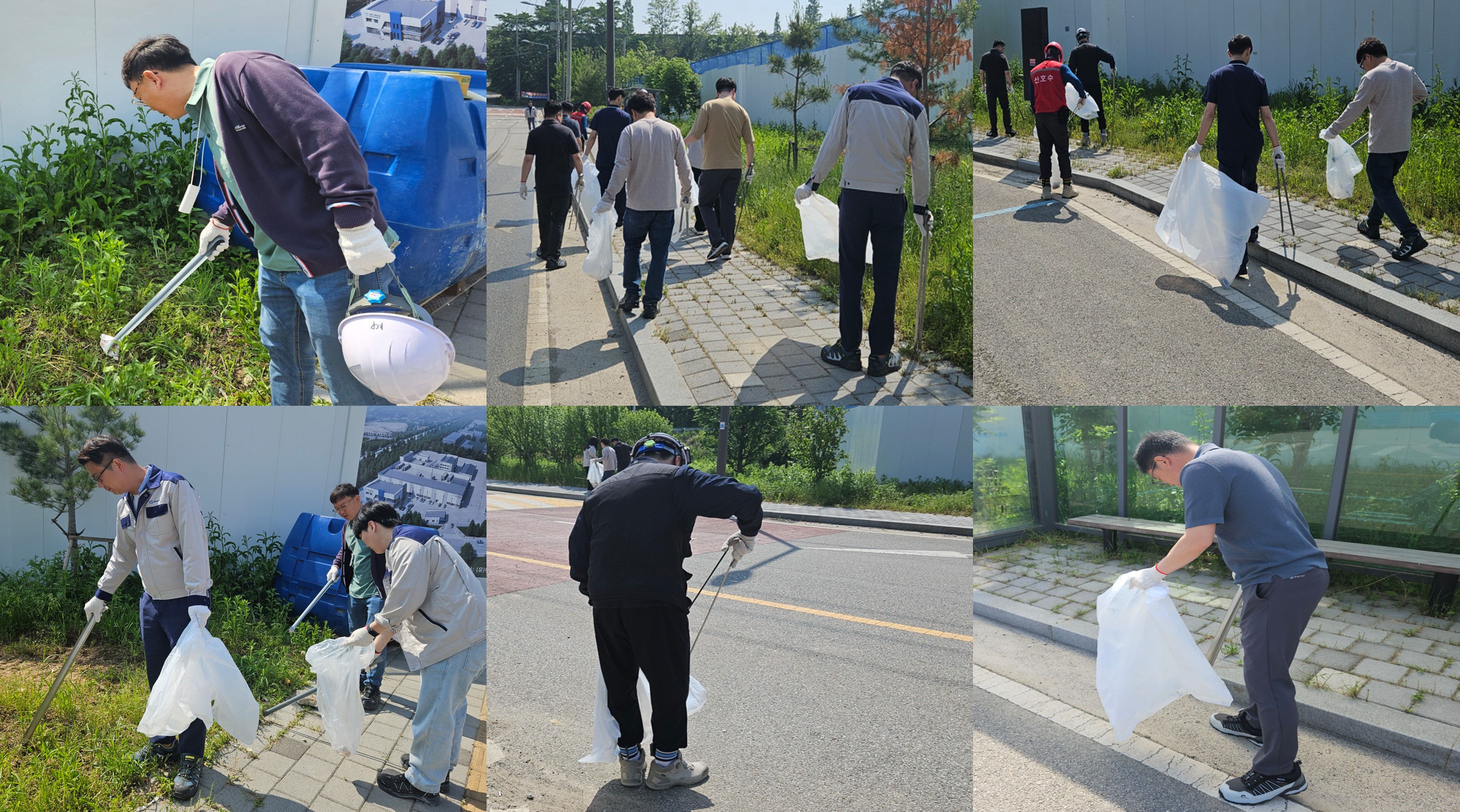
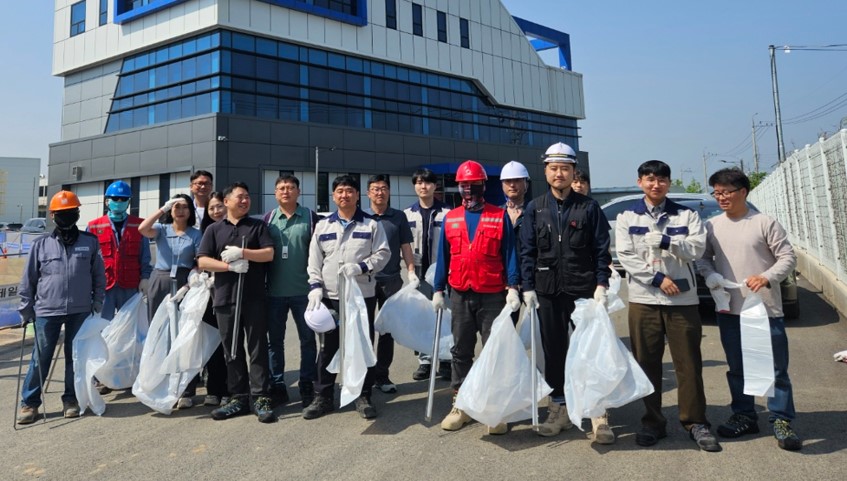
Solus Advanced Materials is actively engaged in ecosystem conservation and carbon neutrality activities.
At 10 a.m. on May 14, a “Plogging Challenge” event was held at the construction site of the OLED Hamyeol Plant, joined
by employees and construction site personnel.
“Plogging” is a term that combines the words “jogging” and “picking up litter,” and is an effort to protect the
environment. It was organized by our EHS Team.
The Plogging Challenge was a 30-minute program that started at the Hamyeol construction site, went through the
neighboring factory grounds, and then returned to the site.
This activity is expected to contribute to the creation of an eco-friendly workplace by enhancing employees'
environmental awareness.
It was also an opportunity for all employees to take responsibility for preserving the environment, and pledge to carry out eco-friendly activities at their work locations.
Solus Advanced Materials is expected to contribute to the creation of an eco-friendly workplace by enhancing employees'
environmental awareness.